

If you’ve been researching ways to buy or sell a home, you’ve probably come across both Opendoor and Flyhomes. At first glance, they sound very similar. Both talk about “cash offers,” faster timelines, and making the process easier. But they work in very different ways.
In short: Opendoor is primarily a sell-fast solution, buying your home directly so you can move on quickly. Flyhomes is primarily a buy-first solution, helping you buy your next home before selling your current one. That distinction affects your timing, your flexibility, and potentially how much you walk away with.
In this guide, we’ll break down how each approach works, what you gain and give up with each, and how to decide which one fits your situation.
How Opendoor Works (The iBuyer Model)
Opendoor operates as an iBuyer, meaning it purchases homes directly from sellers and uses a streamlined, data-driven approach to determine its offer price. This helps you avoid the traditional listing process of preparing your property, hosting showings, and waiting for offers. Instead, you receive a cash offer and decide whether to accept it.
Here’s how the process works:

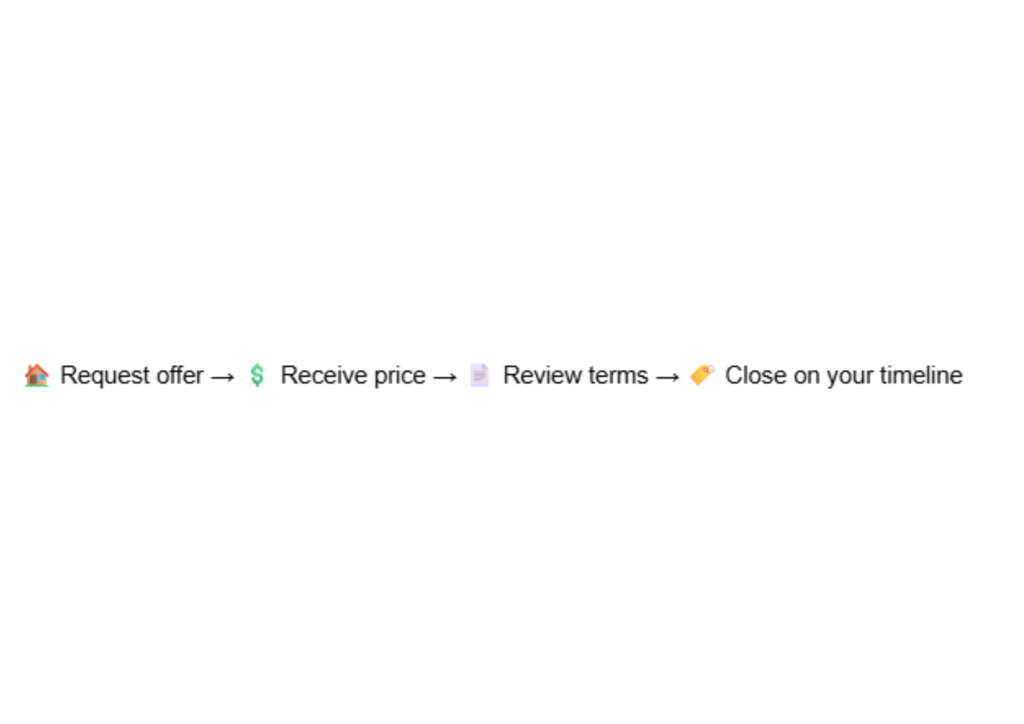
- Request an offer. You provide details about your home online.
- Receive a price. Opendoor evaluates your home using market data, recent comparable sales, and internal pricing models to generate an offer.
- Review final terms. Opendoor deducts a service charge (typically around 5% of the sale price), and may adjust the offer based on estimated repair costs.
- Close on your timeline. If you accept, you can typically close in as few as 14 days.
The Pros
Fast, low-effort sale process
You can sell your home without preparing it, staging it, hosting showings, or managing a traditional listing. The process is designed to minimize steps and shorten the time to close.
Certainty and control over timing
Once you accept an offer, you can close quickly without worrying about financing delays, buyer contingencies, or deals falling through. You choose your closing date, and the transaction proceeds without the typical uncertainties of the open market.
Optional upside potential without downside risk
Opendoor also offers a variation on its model called “Cash Now, More Later,” which provides you a significant portion of your initial offer upfront. If the home later resells above a certain threshold, you may earn additional proceeds. If it sells for less than expected, your upfront payment is still guaranteed, based on Opendoor’s program terms.
The Trade-Offs
Pricing reflects a direct sale rather than competitive bidding
Because you’re selling directly to Opendoor instead of listing on the open market, the offer is based on internal valuation models rather than competing buyer bids, which can result in a lower sale price.
Service fees and post-inspection adjustments reduce net proceeds
Your final payout may be significantly lower than the initial offer after service charges and any repair adjustments are applied.
How Flyhomes Works (The Buy Before You Sell Model)
Flyhomes is not an iBuyer. It provides financing solutions that can help you buy your next home before selling your current one. It’s designed for situations where you need the value from your current property to move forward with your next purchase. Instead of waiting for your home to sell, Flyhomes helps you tap into its equity so you can make an offer on your next property, often without a home-sale contingency.
This approach can make your purchase offer more competitive. It also gives you the opportunity to sell your current home on the open market, where it may attract multiple buyers. Learn more about Flyhomes’ Buy Before You Sell program.
Here’s how the process works:
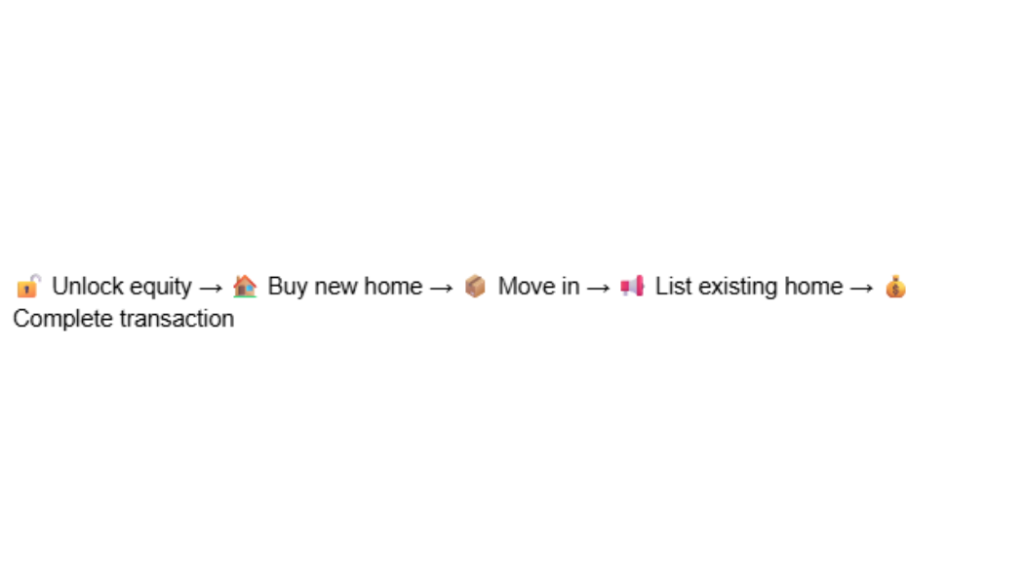
- Unlock equity. Flyhomes helps structure financing based on your current home’s value, giving you the funds to shop for your next home, sometimes in as little as 10 days.
- Buy your next home. With financing in place, you can move ahead with purchasing before selling your current home.
- Move in. You move into your new home once your purchase is complete.
- List your existing home. You prepare your home and list it on the open market for buyers.
- Complete the transaction. You use the sale proceeds to pay off the financing structure and finalize the process.
The Pros
Stronger buying position
Because you can make a non-contingent or cash-like offer, you may be more competitive in a fast-moving market and better positioned against other buyers.
Potential for stronger sale outcomes
Your home is listed on the open market, where it can attract multiple buyers, potentially raising your final sale price.
More control over your move
You can buy first and move on your own timeline, rather than trying to coordinate buying and selling at the same time or arranging temporary housing between homes.
Backup protection in certain scenarios
Some Flyhomes programs include a Guaranteed Backup Contract, which provides a built-in safety net. If your home does not sell on the open market within a specified timeframe, Flyhomes can step in and purchase the home at a predetermined price. This helps ensure you still have access to your equity and can move forward without waiting on a sale.
The Trade-Offs
You still go through a traditional sale process
Selling your home involves preparing it for market, including cleaning and making repairs, then listing it, coordinating showings, and navigating offers and negotiations.
Additional financing costs
These programs typically include financing costs such as origination fees and short-term interest while your home is being sold.
Standard transaction costs still apply
When you sell your home, typical real estate expenses still apply, including agent commissions and closing costs.
Opendoor vs. Flyhomes: Key Differences at a Glance
| Consideration | Opendoor (iBuyer) | Flyhomes (Buy Before You Sell) |
| What happens to your current home | Sold directly to Opendoor | Sold later on the open market |
| When you get paid | At closing (with option for partial upfront + potential later upside) | Access funds to buy first; full proceeds after your home sells |
| Speed of transaction | Often closes in ~14 days | Financing available in as little as ~10 days; full timeline depends on home sale process |
| Home prep required | Minimal to none | Full prep, listing, and showings required |
| How your home price is determined | Based on internal pricing models, with fees and adjustments | Determined by buyer demand in the open market |
| Certainty vs. variability | More predictable outcome once you accept the offer | Final outcome depends on market conditions |
| Costs and fees | Service fee plus potential repair adjustments | Financing costs, plus standard agent commissions and closing costs |
| Buying your next home | You sell first, then buy | You can buy first, then sell |
Which option is right for your situation?
The right choice ultimately comes down to your timeline, your comfort with the traditional real estate process, and your financial goals. With Opendoor, you’ll want to weigh the initial offer against service charges, repair adjustments, and the convenience of avoiding showings. With Flyhomes, you’ll want to weigh the potential upside from an open-market sale against financing costs, agent commissions, closing costs, and the time needed to sell.
Opendoor may be a better fit if:
- You need to sell quickly.
- You want to avoid repairs, showings, and open houses.
- You value certainty and convenience over maximizing your potential sale price.
- You are comfortable accepting a direct-sale offer instead of testing the open market.
Flyhomes may be a better fit if:
- You need to buy your next home before selling your current one.
- You want to make a stronger, non-contingent or cash-like offer.
- You want to sell your current home on the open market, where it may attract multiple buyers.
- You are comfortable preparing, listing, and showing your home to pursue a potentially higher sale price.
In short, Opendoor is generally built for sellers who prioritize speed and simplicity, while Flyhomes is built for homeowners who want to buy first and still pursue a potentially higher sale price on the open market.
FAQs
Is Flyhomes an iBuyer like Opendoor?
No. Opendoor is an iBuyer that purchases your current home directly for cash, allowing you to sell quickly and move on. Flyhomes takes a different approach, helping you secure financing so you can buy your next home first, then sell your existing home on the open market afterward.
Does Opendoor pay fair market value for homes?
Opendoor’s offers are based on market data, recent comparable sales, and your home’s condition. However, because they include a service charge (typically around 5% of the sale price) and estimated repair costs, offers may be lower than what a home could sell for on the open market, depending on competition and market conditions.
Do I need a real estate agent to work with Opendoor or Flyhomes?
No. You can work directly with Opendoor without a real estate agent, since the company handles the purchase directly. With Flyhomes, you typically work with a loan officer to structure financing, and most buyers also work with a real estate agent to buy and sell on the open market, though this can vary by situation.
How do Flyhomes’ fees compare to Opendoor’s service fee?
Opendoor charges a service fee, typically around 5% of the sale price, along with any repair-related adjustments that are reflected in your final proceeds.
Flyhomes does not rely on a single service fee, and total costs vary depending on the program you use. These may include financing-related charges (such as interest and origination or broker fees), a flat fee for certain services like a Guaranteed Backup Contract, and standard real estate expenses like agent commissions and closing costs.
Is Opendoor or Flyhomes faster?
Opendoor is typically faster if your goal is to sell your home quickly, with many transactions closing in as few as 14 days. Flyhomes can help you move forward on buying your next home quickly by arranging financing in a short timeframe, but the overall process usually takes longer because your existing home is still sold on the open market.
Is buying before you sell right for you? Flyhomes can help you explore your options and move forward with confidence. Learn more.