
Michael Markowitz

Buying and selling a home often creates timing challenges on both sides of the transaction.
If you're selling a home, you may need extra time after closing before you're ready to move out. If you're buying, providing the seller extra time to remain in the home can make your offer more attractive and help you stand out in a competitive market.
These situations often lead to rent-back agreements as a way to help both buyers and sellers achieve their goals. But while they can be a useful tool, they also introduce financial, legal, and logistical considerations that are important to understand before agreeing to one.
This guide explains how rent-back agreements work, what they typically include, the costs and risks involved, and when an alternative solution may be a better fit.
What is a rent-back agreement?
A rent-back agreement, sometimes called a seller rent-back, allows the seller of a home to continue to reside there for a period of time after the sale closes. The buyer becomes the property’s new owner, but the seller remains in the home temporarily and may pay an agreed-upon rent or occupancy fee.
These arrangements are often used when the timing of a home sale and a move don't line up perfectly. After ownership has transferred to the buyer, sellers may need extra time to move out and can remain in the home for a short period while transitioning to their next one.
How does a rent-back agreement work?
A rent-back agreement is typically arranged as part of the home sale transaction. While the specific terms can vary, the process usually follows these steps:
1. The buyer and seller agree to a rent-back
During the negotiation process, the parties may decide that after closing the seller can remain in the home rather than move out immediately. The details are typically included in a separate addendum to the purchase agreement.
2. The buyer and seller set the rent-back period
The buyer and seller agree on how long the seller can stay in the property after closing. Rent-back periods often last anywhere from a few days to several weeks, depending on the circumstances.
If you're the buyer, it's important to understand that your mortgage lender may place limits on the length of the arrangement. Most owner-occupied loan documents require the buyer to reside at the property within 60 days of closing, though the exact deadline and any exceptions depend on the loan program and lender. Before agreeing to a rent-back, make sure the timeline complies with your loan terms.
3. The seller pays rent or an occupancy fee
The parties agree on whether the seller will pay an occupancy fee and, if so, the daily or monthly amount the seller will pay to remain in the home during the rent-back period. Those payment terms are typically documented in the rent-back agreement before closing.
4. The seller moves out and turns over possession
Once the rent-back period ends, the seller vacates the property, and the buyer takes full possession of the home. At that point, the arrangement is complete.
Why buyers and sellers use rent-back agreements
Rent-back agreements can benefit both buyers and sellers. For sellers, they provide extra flexibility during the transition to a new home. For buyers, they can strengthen an offer and make it more appealing in a competitive market.
Why sellers choose a rent-back agreement
If you're selling your home, a rent-back agreement can help you:
- Bridge the gap between selling your current home and buying your next one
- Close on or move into your next home without feeling rushed
- Avoid paying for temporary housing or storage
- Coordinate your packing, moving company, and other relocation logistics
Why buyers agree to a rent-back
If you're buying a home, agreeing to a rent-back may help you:
- Make your offer more attractive to the seller
- Stand out in a competitive housing market
- Increase your chances of securing the home
- Collect short-term rental income that may help offset carrying costs before you move in
For many buyers and sellers, a rent-back agreement is simply a practical way to make the transition between homes a little easier. However, before agreeing to one, it's important to understand the costs, responsibilities, and potential risks involved.
Rent-back agreement costs: Who pays what?
A rent-back agreement can involve several ongoing costs after closing, the most significant of which is the mortgage. The buyer is usually responsible for making the mortgage payments because ownership transfers to them at closing, even if the seller continues living in the home during the rent-back period. In exchange for remaining in the property, the seller typically pays an agreed-upon occupancy fee or rent.
Many of the other costs associated with the home, including monthly bills and ongoing responsibilities, should be clearly addressed in the rent-back agreement before closing. While the exact terms are negotiable, costs are often divided like this:
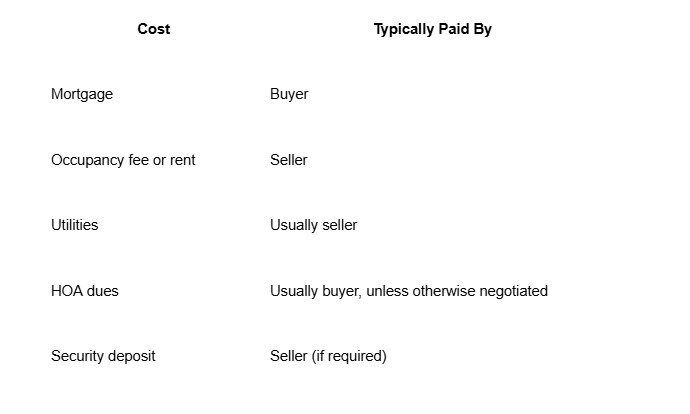
Insurance and maintenance
Insurance and maintenance responsibilities aren't standardized and should be clearly defined in the rent-back agreement. Typically, the buyer maintains homeowners insurance on the property, while the seller may need coverage to protect their personal belongings during the rent-back period. Because coverage requirements can vary, both parties should confirm with their insurance providers that they have appropriate protection before closing.
The rent-back agreement should also specify who is responsible for routine maintenance, unexpected repairs, and any damage that occurs while the seller remains in the home.
What should a rent-back agreement include?
A rent-back agreement doesn't have to be complicated, but it should be detailed. Taking the time to spell out everyone's rights and responsibilities upfront can help prevent misunderstandings later. At a minimum, the agreement should address the following:
- Occupancy period: The seller's move-out date and whether the rent-back can be extended.
- Rent or occupancy fee: The daily or monthly amount the seller will pay, as well as when payments are due.
- Security deposit: Whether a deposit is required, how much it will be, and under what circumstances it may be withheld or returned.
- Utility responsibilities: Who pays for utilities such as electricity, water, gas, internet, and trash service.
- Maintenance and repairs: Who is responsible for routine maintenance, unexpected repairs, and damage that occurs during the occupancy period.
- Insurance requirements: What insurance coverage each party should maintain while the seller remains in the home.
- Right of entry: Whether the buyer may enter the property during the rent-back period and under what circumstances, such as for inspections, repairs, or a final walkthrough before taking possession.
- Move-out condition: The condition the property should be left in, including any cleaning requirements or agreed-upon repairs before possession is transferred.
- Holdover terms: What happens if the seller remains in the home beyond the agreed-upon move-out date, including any additional occupancy fees or penalties.
- Occupancy status: Whether the seller's continued occupancy is structured as a temporary license or a lease (more on this below).
- Dispute resolution: How disagreements will be handled if questions arise during the rent-back period.
A thorough agreement won't prevent every problem, but it can go a long way toward protecting both parties if questions or disagreements arise. Before signing, be sure you understand every term and, when appropriate, review the agreement with your real estate agent or a real estate attorney.
Rent-back agreement risks for buyers and sellers
A rent-back agreement can make buying and selling a home more convenient, but it also comes with risks for both parties. Understanding those risks ahead of time can help you decide whether a rent-back is the right fit for your situation and, if you move forward, prepare for potential challenges before they become costly problems.
Risks for buyers
If you're buying a home, a rent-back agreement can temporarily put you in a landlord-like role, and in some states, the seller may even gain formal tenant protections. Even if the arrangement only lasts a few weeks, you're still responsible for a property that someone else is living in. Here are some of the challenges you may face:
- Delayed possession: If the seller doesn't move out on time, you may have to postpone your own move or take legal action to regain possession of the property.
- Financing restrictions: A rent-back that conflicts with your loan's occupancy requirements could jeopardize your financing or violate your loan terms.
- Property damage: Damage that occurs during the rent-back period can lead to disagreements over who is responsible for repairs.
- Insurance and liability concerns: Insurance coverage can become more complicated while the seller continues living in a home you already own.
- Unexpected costs: If problems arise during the rent-back period, you could face legal fees, repair costs, or additional housing expenses.
Risks for sellers
If you're selling your home, it's easy to think of a rent-back as simply staying in your house a little longer. But once the sale closes, it's no longer your property. You'll need to follow the terms of the agreement and be prepared to move out by the agreed-upon date. Potential challenges include:
- Additional costs: You'll typically pay rent or an occupancy fee while remaining in the home after closing.
- Security deposit disputes: If the property isn't left in the agreed-upon condition or is damaged during the rent-back period, part or all of your security deposit could be withheld.
- Limited flexibility: You may need to adjust your moving plans to comply with the agreed-upon move-out date, even if your next home isn't quite ready.
- Liability for damage: Depending on the terms of the agreement, you could be responsible for repairs or other costs if damage occurs while you're occupying the home.
- Potential legal disputes: Disagreements over payments, repairs, move-out dates, or other terms can become time-consuming and expensive if they can't be resolved.
While a well-written rent-back agreement can help reduce many of these risks by setting clear expectations for both parties, it can't eliminate every potential issue. That's why it's important to understand the tradeoffs before deciding whether a rent-back agreement makes sense for your situation.
License vs. lease: Why the distinction matters
Depending on applicable law and the terms of the agreement, the seller's continued occupancy may be treated as a temporary license or a lease. That distinction can affect the buyer's right of entry, the seller's occupancy protections, and the process for regaining possession if the seller does not move out on time. The agreement's label may not determine its legal effect, so both parties should have a local real estate attorney review the arrangement before signing.
A better alternative for sellers: Buy before you sell
Rent-back agreements can be a helpful solution if you're selling one home while buying another. But they're often used to address a larger timing challenge.
If you're buying another home, you may feel like you're stuck in a catch-22. You need the equity from your current home to help pay for your next one, but you usually have to sell your current home before you can access it. That can leave you scrambling to coordinate two closings, find temporary housing, or negotiate a rent-back agreement just to buy yourself a little more time.
A buy-before-you-sell solution takes a different approach. Instead of selling your current home before buying your next one, it's designed to help eligible homeowners purchase first and sell when they're ready. That can make it easier to move once, stay in control of your timeline, and avoid many of the challenges that can come with a rent-back agreement.
Here's how the two approaches compare:
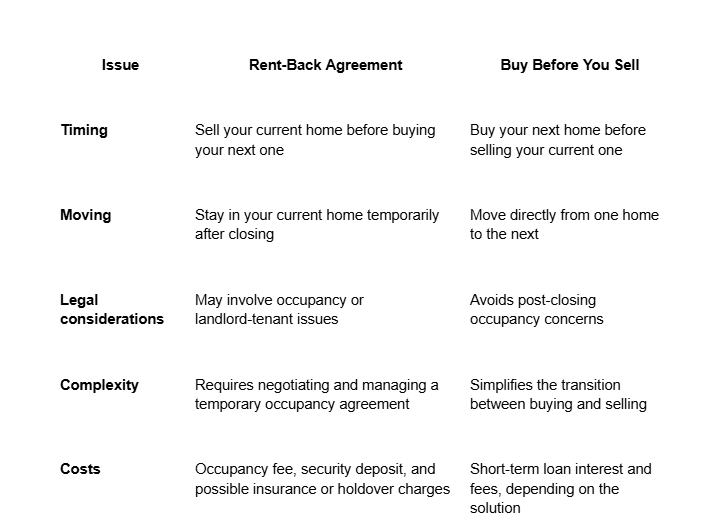
Flyhomes offers several buy-before-you-sell solutions designed to help eligible homeowners access the equity in their current home before selling it. Depending on borrower qualifications, Instant Equity (a home equity loan) may let you tap that equity before selling, while a Cross Collateral Loan uses equity from both homes to reduce the cash you need for your next purchase, helping you avoid a home-sale contingency and the pressure of coordinating two closings on the same timeline.
See how much equity you could use toward your next home
If you're looking to strengthen your offer in a competitive market, you might consider a Flyhomes Cash Offer, which supports a cash-like, non-contingent bid, or a Guaranteed Backup Contract, which can allow your lender to exclude your current mortgage from your debt-to-income calculation. These tools can replace the need for a rent-back agreement by helping you secure your next home before you sell.
If a rent-back agreement feels more like a workaround than a solution, it may be worth exploring Flyhomes’ Buy Before You Sell Programs.
FAQs
How much should a seller pay for a rent-back?

A common approach is for the seller to pay a daily or monthly occupancy fee based on the buyer’s carrying costs for the home, often prorated from the mortgage payment, taxes, insurance, and any applicable HOA dues. In other cases, the fee may be based on the local fair market rental rate for similar properties, which can provide a helpful benchmark for both sides. In either case, the final amount is negotiated between the buyer and seller and should be clearly documented in the rent-back agreement before closing.
Can a rent-back agreement be extended?
Yes, if both the buyer and seller agree. Any extension should be documented in writing before the original rent-back period expires. Buyers should also confirm that an extension won't conflict with their mortgage lender's occupancy requirements, as some loan programs require the buyer to move into the home within a certain period after closing.
Can a buyer back out of a rent-back agreement?
It depends on where you are in the transaction. Before closing, a buyer can generally back out only if they have a valid contingency under the purchase contract, such as a financing or inspection contingency. Without a contractual right to cancel, backing out could result in the loss of the earnest money deposit or other legal consequences.
Once the sale has closed, the buyer is generally bound by the terms of the rent-back agreement and can't simply cancel the arrangement or require the seller to move out before the agreed-upon date. If you're considering making changes after signing, consult your real estate agent or a real estate attorney before moving forward.
Who is responsible if the home is damaged during a rent-back?
That depends on the terms of the rent-back agreement and the circumstances surrounding the damage. A well-written agreement should clearly state who is responsible for routine maintenance, repairs, and accidental damage during the occupancy period. Buyers and sellers should also confirm they have appropriate insurance coverage before closing.
Can you do a rent-back agreement with an FHA loan?
Yes, but there may be limitations. FHA loans generally require buyers to occupy the home as their primary residence within 60 days of closing, although some lenders or loan programs may require occupancy even sooner. If a rent-back extends beyond your lender's occupancy requirement, it could create financing issues or affect your loan eligibility. Before agreeing to a rent-back, confirm that the timeline complies with your lender's requirements.
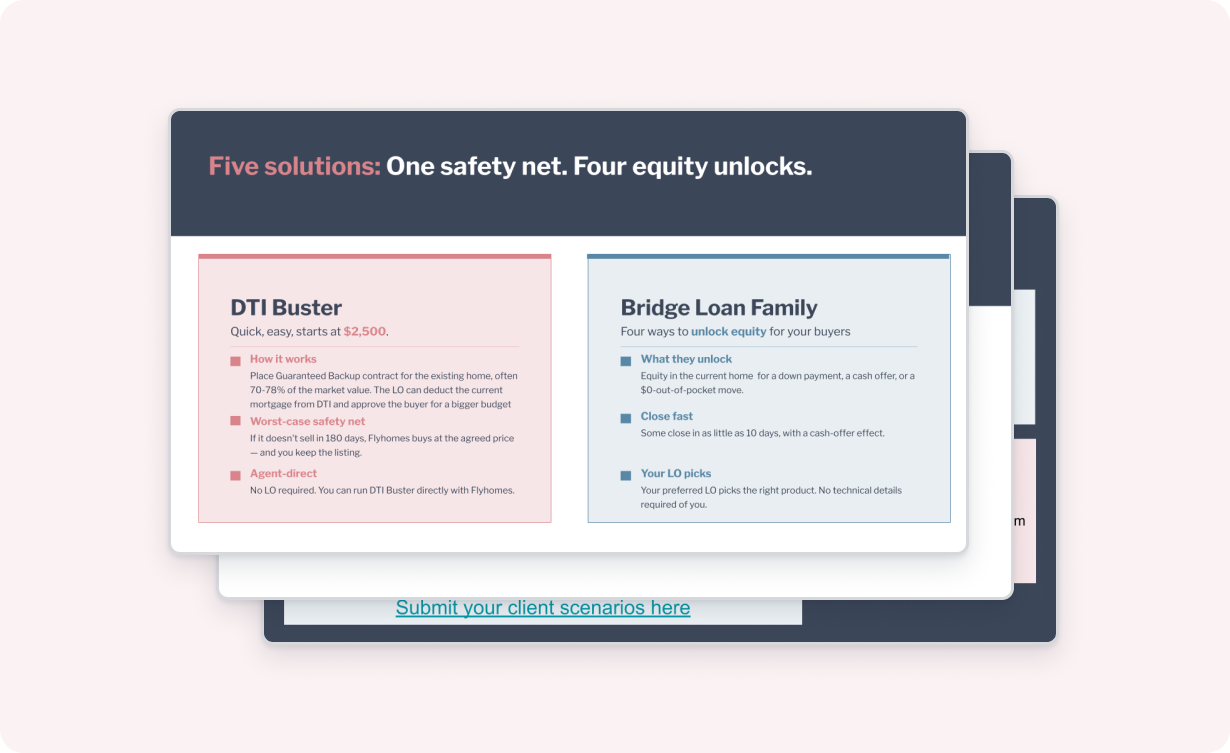
Buy Before You Sell Presentation
A presentation deck that helps you introduce Flyhomes Buy Before You Sell solutions to your partner agents.
Read More
Close in 10 days like a cash buyer and move only once
Close in 10 days like a cash buyer and move only once
Read More%20(1).avif)