Michael Markowitz

Selling your home and buying another is an exciting time. You're preparing for a new chapter, but the process of moving between homes can sometimes be more complicated than expected. You may find yourself in an in-between phase, figuring out where to live, what to do with your belongings, and how to keep your move on track.
Knowing your options can make that process easier to manage. In this guide, we'll explore where you can stay between homes, how to handle your belongings, what temporary housing may cost, and which strategies may best help you navigate the transition. With a little planning, you can choose the approach that best fits your timeline, budget, and circumstances.
Why you may need a place to stay between homes
If you're selling one home and buying another, you probably picture the whole process happening in one smooth transition. In a perfect world, you'd close on both homes the same day, move your belongings once, and settle into your new place by dinner.
In reality, closing dates rarely line up. Your buyer may want to move in right away, or the seller of your next home may need extra time before handing over the keys. If you're buying a newly built home, construction delays can push your move-in date back by weeks or even months. In competitive housing markets, you may also choose to sell before buying so you have cash in hand and can make an offer without a home-sale contingency.
Even if your closing dates are only a few days apart, you may still need somewhere to live in the meantime. That's why it's worth having a temporary housing plan before you need one.
Where to stay between selling and buying a house
The good news is that you have several options. The best choice depends on your timeline, budget, household, and how much flexibility you have during your move.
Here are five of the most common temporary housing solutions to consider:
Stay with family or friends
If you have family or friends who are willing to take you in, this is often the simplest temporary housing solution. Staying with people you know and trust can make an otherwise stressful transition feel a little more comfortable, and you won't have to commit to a lease, reservation, or other living arrangement while you're juggling a move.
The biggest advantage is cost. Living with loved ones is often free or far less expensive than renting a home or staying in a hotel, and you may have more flexibility if your closing or move-in dates change unexpectedly. The downside is that you'll likely have less privacy, limited space for your belongings, and fewer options if you're moving with children or pets. And because you're sharing space with people close to you, any inconveniences can feel more personal.
Rent a short-term house or apartment
A short-term rental can give you many of the comforts of home without requiring a long-term lease. Depending on your market, you may be able to find furnished apartments, month-to-month rentals, corporate housing, or homes available for several weeks or months.
This option gives you more privacy, space, and stability than a hotel, making it a good choice for families, remote workers, or anyone who expects their transition between homes to last several weeks or longer. The tradeoff is that flexibility often comes at a price. Short-term rentals may cost more than a traditional lease because you're paying for convenience, shorter commitments, and, in many cases, furnished accommodations. Availability can also be limited, especially in competitive housing markets.
Check into an extended-stay hotel
If you only need temporary housing for a few days or weeks, an extended-stay hotel can be one of the easiest options. These hotels typically include furnished rooms, kitchenettes, utilities, and housekeeping, allowing you to move in without worrying about setting up services or furnishing a space.
The convenience is hard to beat, especially if your timeline is uncertain or you're relocating to a new city. However, hotel rooms usually offer less space than a rental home or apartment, and nightly or weekly rates can make longer stays expensive. Hotels may also be less practical for larger families or households with pets.
Book a vacation rental
Vacation rental platforms such as Airbnb and Vrbo can provide a comfortable middle ground between a hotel and a traditional rental. Many are fully furnished homes with kitchens, multiple bedrooms, outdoor space, and other amenities, making them a popular choice for families or anyone who wants a more home-like environment during a temporary stay.
However, availability, pricing, minimum stay requirements, and local regulations vary by location. Cleaning fees and other charges can also increase the total cost, so it's worth comparing several options before making a reservation.
Negotiate a rent-back agreement
In some cases, the easiest place to stay is the home you've already sold. A rent-back agreement allows you to remain in the home for an agreed-upon period after the sale closes. The buyer becomes the new owner, while you continue living in the home temporarily and may pay a negotiated rent or occupancy fee.
This gives you extra time to close on your next home or finish your move without rushing. It can also help you avoid moving twice and eliminate the need for temporary housing or storage. However, the arrangement can come with additional costs and means continuing to occupy a home you no longer own. You'll also need to move out by a specific date, and disagreements over the terms can create headaches for both parties.
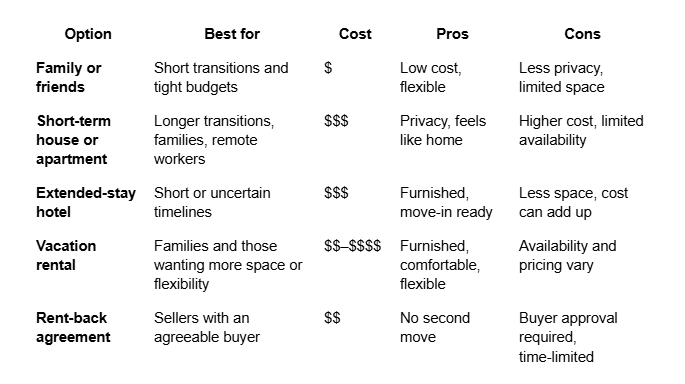
Here's a quick look at how these five options compare.
How much does temporary housing really cost?
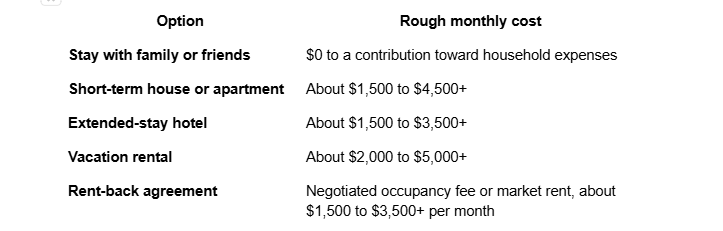
The cost of living between homes depends on the option you choose, where you live, and how long you need the space. A month in an extended-stay hotel, for example, may cost far more in a major coastal city than in a smaller Midwestern market.
As a very rough national guide, here's what you might expect to pay per month:
Prices can vary based on location, the size and type of property, and the amenities included. But the monthly housing cost is only one part of the calculation. Depending on your situation, you may also need to budget for:
- Storage for belongings that won't fit in your temporary home.
- Moving costs, particularly if temporary housing means moving twice.
- Pet fees or deposits.
- Utilities and internet, if they aren't included.
- Cleaning fees, service fees, and lodging taxes for some vacation rentals and hotels.
- Security deposits for some rental arrangements.
These expenses can add up, especially when a short transition stretches into several months. When comparing your options, look beyond the monthly price of the place you'll live and consider the full cost of getting from one home to the next.
What should you do with your belongings?
Finding a place to live is only half the challenge. You also need to decide where your belongings will go, especially if your temporary residence is smaller than your current home or your next one. If everything won't fit, you'll need somewhere to store the rest while you wait to move in.
Portable storage containers let you pack your belongings yourself and have the container transported to a storage facility or, where permitted, kept on your property. They're a convenient option if you want to avoid unloading and reloading everything multiple times.
Self-storage gives you a traditional storage unit with access to your belongings whenever you need them. It's a flexible option, but you'll need to handle the loading and unloading yourself, potentially more than once.
Full-service storage takes more of the work off your plate. A company picks up your belongings, stores them, and returns them when you're ready, although you may have less convenient access to individual items while they're in storage.
Whatever option you choose, be sure to maintain access to clothing, medications, important documents, work equipment, and items for children or pets. You don't want to discover that the one thing you need is buried in a storage unit full of boxes.
Can you avoid temporary housing altogether?
Temporary housing isn’t always inevitable. A rent-back agreement is one way to avoid it, but it isn't the only option. Depending on your finances, timeline, and the terms of your sale and purchase, you may be able to go directly from your current home to your next one by exploring one of these alternatives:
Coordinate your closing dates
If your home sale and purchase close at roughly the same time, you may be able to move directly from one home to the other. However, a delay in either transaction can disrupt the entire plan, so careful coordination is required among the buyers, sellers, lenders, title or escrow companies, and movers.
Make your purchase contingent on selling your current home
A home-sale contingency makes your purchase dependent on selling your current home within an agreed-upon timeframe. This can give you time to sell first, although you may still need temporary housing if the two closing dates don't line up. However, in a competitive market, sellers may find a contingent offer less attractive than one without conditions.
Use financing to buy before you sell
If you have sufficient equity in your current home and qualify for financing, a bridge loan or other equity-based financing may allow you to purchase your next home before your current one sells. You can then move directly into your new home and sell the old one afterward, but you'll need to account for the cost and risks of carrying two homes at once.
See how much equity you could use toward your next home
Consider a buy-before-you-sell program
Some programs allow eligible homeowners to purchase their next home before selling their current one, giving them more control over the timing of their move. Programs vary in their eligibility requirements, fees, and terms, so make sure you understand how the arrangement works before committing.
How Flyhomes can help eligible homeowners move once
If you want to avoid temporary housing, Flyhomes offers several Buy Before You Sell solutions that may help eligible homeowners purchase their next home before selling their current one. Depending on your situation and qualifications, Instant Equity, a home equity loan, may let you access equity from your current home, while a Cross Collateral Loan combines the value of your current home and next home into a single short-term loan that can reduce the cash you need to move forward.
Other solutions can help you make a stronger offer in a competitive market. For example, a Flyhomes Cash Offer, a purchase bridge loan, may allow eligible buyers to make a cash-like, non-contingent offer. Once your previous home sells, the bridge financing can be repaid or refinanced into a long-term mortgage. These options can give you more flexibility to buy your next home first, then sell your current home on a timeline that works for you.
If you'd rather avoid moving twice, it may be worth exploring Flyhomes’ Buy Before You Sell Programs.
FAQs
Can a seller stay in the house after closing?

Yes. A rent-back agreement may allow the seller to remain in the home for an agreed-upon period after the sale closes, typically while paying the buyer rent or an occupancy fee.
How long can a rent-back agreement last?
The buyer and seller negotiate the length of a rent-back, which may range from a few days to several weeks. However, mortgage lenders often require the buyer to establish the property as a principal residence within 60 days of closing. Longer rent-backs may not meet the lender's occupancy requirements, so the buyer should confirm the timeline before agreeing to one.
Can you use home-sale proceeds before the sale closes?
No. Home-sale proceeds generally aren't available until the sale closes and funds are disbursed. If you need access to money sooner, financing that uses your existing home equity may provide funds before the sale is complete.
Can you close on your current and next homes on the same day?
Yes. With careful planning and coordination, you may be able to close on both properties on the same day and move directly from one to the other. The timing can be challenging, however, since lenders, title or escrow companies, and other parties all need to stay on schedule.
What if my new home isn't ready when my old one sells?
Until your new home is ready, you'll have to decide what to do with your belongings and arrange somewhere to live. Depending on your timeline and circumstances, options may include staying with family or friends, renting a short-term home or apartment, booking an extended-stay hotel or vacation rental, or negotiating a rent-back agreement with the buyer of your current home.