Michael Markowitz
.jpeg)
If you’re shopping for a home, you’ve probably heard that “cash offers win” in competitive markets. But what does that actually mean, and are cash offers really that effective?
A cash offer simply means buying a home without relying on a traditional mortgage at closing. While that can make these offers more straightforward for sellers, they’re not a guaranteed advantage in every situation. There’s also more to using them effectively than most buyers realize.
This guide breaks down how cash offers work and why they matter. We'll also show how you can make a cash offer even if you don't have hundreds of thousands of dollars in your bank account.
What is a cash offer on a house?
A cash offer on a house is an offer backed by funds that are already available for the purchase. Instead of waiting for a lender to finalize financing before closing, you show you already have access to the money needed to complete the transaction.
Those funds can come from several different sources, including:
- Personal savings
- Proceeds from the sale of another home
- Investment or other liquid accounts
- Home equity through a HELOC or bridge loan
Unlike a financed offer, a cash offer doesn’t depend on a mortgage lender approving your loan and releasing funds before the sale can close. Because the funds are already available, cash offers can often move through the closing process more quickly and with fewer complications.
That doesn’t mean you show up with literal stacks of cash. The transaction still moves through the standard real estate process, including escrow, title review, inspections, and wire transfers. You also typically provide proof of funds, such as bank statements or a letter from a financial institution, to show you can cover the purchase price.
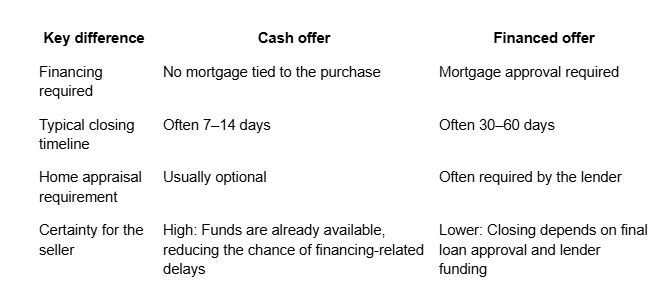
Cash offer vs. financed offer
Why sellers often prefer cash offers
As the comparison above shows, the biggest advantage of a cash offer isn't necessarily speed; it's certainty. Because cash buyers already have access to the funds needed to complete the purchase, sellers don't have to worry about delays or complications related to mortgage approval and funding.
That said, cash doesn't automatically win every bidding war. Sellers consider the entire offer, including price, contingencies, timing, and other terms. In some situations, a financed offer may be more appealing if it comes with a higher price or terms that better align with the seller's goals.
How to make a cash offer on a house
A cash offer involves many of the same steps as buying a home with a mortgage, including making an offer, completing inspections, and closing through escrow. However, because the purchase doesn't depend on lender approval, you can move more quickly from offer acceptance to closing.
1. Determine your budget
Before making an offer, review your available funds and decide how much you're comfortable spending. Be sure to leave room for closing costs, potential repairs, moving expenses, and emergency savings.
2. Get proof of funds ready
Most sellers will want proof that you can cover the purchase price. This may include bank statements, investment account statements, or a letter from a financial institution.
3. Hire a real estate agent
While it's possible to buy a home without an agent, professional guidance can be especially valuable in competitive markets. An experienced agent can help you evaluate comparable sales, structure your offer, and negotiate favorable terms.
4. Find a home and determine your offer price
Once you've found a property, work with your agent to evaluate local market conditions, comparable sales, and the seller's goals before deciding how much to offer.
5. Decide which contingencies to include
Before the sale moves forward, you can include contingencies that let you renegotiate or walk away if certain issues arise during the transaction.
Because you aren't relying on mortgage approval as a cash buyer, you typically don't need a financing contingency. You can also choose to waive other conditions, such as inspection or appraisal contingencies, to make your offer more competitive, but doing so can increase risk if problems are discovered later.
6. Submit your offer and earnest money deposit
Once you've decided on your offer price and contingencies, submit your offer along with an earnest money deposit and proposed closing timeline. The seller may accept, reject, or counter the offer.
7. Complete inspections and due diligence
Once your offer is accepted, complete the inspections and other due diligence outlined in your contingencies. Even when paying cash, this step is an important part of evaluating the condition and legal status of the property. This may include a home inspection, title review, homeowners insurance, and an HOA document review if applicable.
8. Transfer funds and close
Once all conditions have been satisfied, you'll wire funds to escrow or provide a cashier's check, complete a final walkthrough, sign the closing documents, and receive the keys to your new home.
How to make a cash offer on a house without cash
Not every buyer has enough readily available cash to fund an entire home purchase. Depending on your financial situation, existing assets or home equity may provide other ways to make a cash offer.
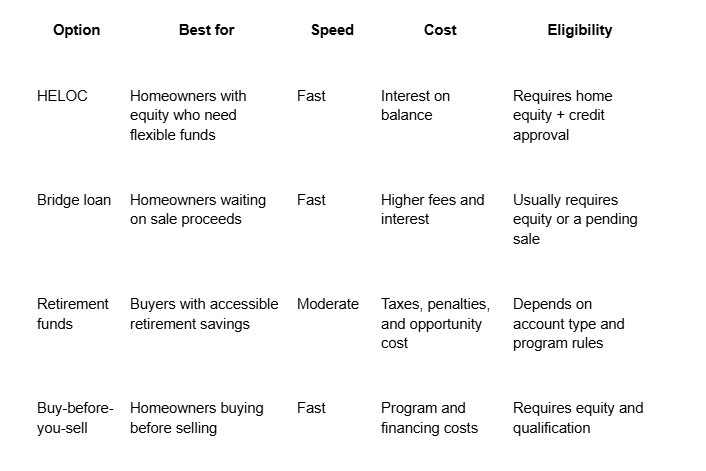
HELOCs
A home equity line of credit (HELOC) allows homeowners to borrow against the equity in their current home. For homeowners who have built substantial equity, a HELOC may provide enough funds to help make a cash offer on a new property while allowing them to repay the balance over time.
Bridge loans
Bridge loans provide short-term financing that helps cover the gap between buying a new home and selling an existing one. They can be useful for homeowners who need funds for a down payment or purchase while they're waiting for their current home to sell.
Because bridge loans are intended as temporary financing, they often carry higher interest rates and fees than traditional mortgages.
Borrowing from retirement accounts
Some buyers consider borrowing from retirement accounts to help fund a home purchase, particularly if they need access to cash and have significant savings available. Depending on the account type, this may trigger taxes, penalties, or long-term impacts on retirement savings, so it's wise to consult a financial or tax professional first.
Buy-before-you-sell programs
For homeowners who need equity from their current home to purchase their next one, buy-before-you-sell programs can provide another path. These programs allow eligible buyers to purchase a new home before selling their existing property.
By buying first, you may be able to avoid a home-sale contingency, make a stronger offer, and move on a timeline that works for your household rather than your real estate transaction. Taking stock of your available equity, finances, and moving timeline can help you decide whether this strategy makes sense for your situation.
Comparison of options for making a cash offer without cash
The pros and cons of making a cash offer
Cash offers provide several advantages, particularly in competitive housing markets, but they also come with tradeoffs. Understanding both the benefits and potential drawbacks can help you decide whether this approach fits your situation.
Pros of making a cash offer
One of the biggest advantages of a cash offer is certainty. With no mortgage lender involved, there are fewer opportunities for financing-related delays or complications.
Cash offers can also simplify the closing process by eliminating many of the steps associated with mortgage financing. In addition to helping transactions move more efficiently, this may reduce certain lender-related fees and other financing costs.
Because of this combination of certainty and simplicity, cash buyers may have more flexibility when structuring an offer or negotiating terms. In some situations, that flexibility can give cash offers a meaningful advantage in a competitive market, even when competing against higher-priced financed offers.
Cons of making a cash offer
The biggest drawback of paying cash is that it can tie up a substantial amount of money in a single purchase. That may leave less liquidity available for emergencies, renovations, or other financial goals. It can also reduce diversification by concentrating more of your wealth in one asset rather than spreading it across multiple investments.
You should also consider the potential opportunity cost. Money used to purchase a home may no longer be available for other investments that could generate returns over time. While cash offers can be attractive to sellers, you may feel pressure to waive contingencies to make your offer even more competitive, which can increase risk if issues arise during inspections or due diligence.
Common mistakes to avoid when making a cash offer
Making a cash offer can simplify the homebuying process, but it doesn't eliminate the need for careful planning and due diligence. To help keep your purchase on track, avoid these common mistakes:
- Draining your savings: Leaving yourself without adequate reserves can create financial stress after closing, especially if unexpected repairs or expenses arise.
- Waiving inspections too quickly: Removing inspection contingencies can strengthen your offer, but doing so can leave you responsible for costly repairs or other issues that aren't discovered until after closing.
- Overlooking additional costs: Even without a mortgage, you may still be responsible for closing costs, property taxes, homeowners insurance, and other expenses that can add up quickly.
- Not timing fund transfers properly: Large transfers can take time to process. Make sure your funds will be available when needed to avoid last-minute delays before closing.
- Skipping title review and other due diligence: A cash purchase doesn't eliminate the need to verify ownership, review title issues, and evaluate the property's condition.
- Assuming a cash offer guarantees acceptance: While cash offers can be attractive to sellers, factors such as price, timing, and overall terms still play an important role in the decision.
How Flyhomes helps buyers make stronger offers
Making a cash offer is often easier when you have substantial savings or home equity available. For eligible buyers who need additional flexibility, Flyhomes offers several Buy Before You Sell programs that can help unlock equity, bridge financing gaps, and strengthen an offer.
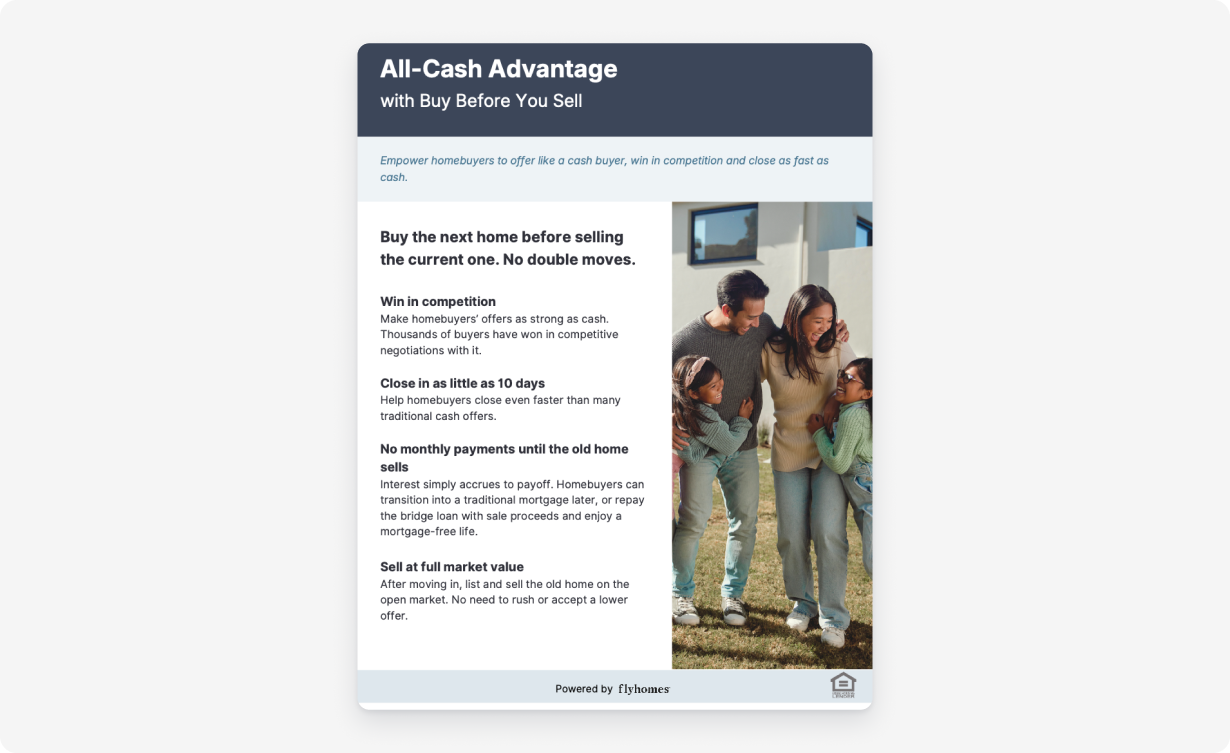
One of these solutions is the Flyhomes Cash Offer program, which allows eligible buyers to make a cash-backed, non-contingent offer while securing long-term financing afterward. This can help strengthen an offer by providing sellers with greater certainty and a faster path to closing.
Other Buy Before You Sell tools help homeowners access equity from their current home before selling. Depending on your situation, options such as Instant Equity and a Cross Collateral Loan may help you access home equity, avoid a home-sale contingency, and buy your next home before selling your existing one.
Ready to explore your options? Learn more about the Flyhomes Buy Before You Sell Program to see which solutions may be available to you.
FAQs
Can you get a mortgage after making a cash offer?

Yes. Many buyers who purchase a home with cash later refinance into a mortgage. This can happen soon after closing through delayed financing, which allows buyers to recover a portion of the cash they used, or later once they’ve built equity and choose to take out a traditional loan.
Do cash offers close faster?
Often, yes. Because cash offers don’t require mortgage underwriting or final loan approval, the closing process can move more quickly. However, inspections, title review, and other steps are still part of the timeline.
Do you need a real estate agent to make a cash offer?
No, but working with an experienced agent can help you structure a stronger offer, navigate negotiations, and avoid common pitfalls during the process.
Are cash offers always better for sellers?
Not always. While cash offers can reduce financing risk, sellers also consider price, timing, and overall terms when choosing an offer.
How does Flyhomes’ cash offer program work?
Flyhomes enables eligible buyers to submit a cash-backed offer using a short-term purchase bridge while securing long-term financing. The purchase bridge allows the offer to be presented as cash at closing and later converted into a standard mortgage, helping strengthen the offer while preserving a traditional financing path.
%20(1).avif)